Prairie Rattlesnake
Prairie Rattlesnake
Crotalus viridis
Species at Risk: Sensitive
Description
The
prairie rattlesnake is Alberta’s only member of the Viperidae family,
the vipers. More specifically it belongs to the subfamily Crotalinae,
the pit vipers. Members of this family have verticle pupils and a heat
sensitive pit organ inbetween the eye and the nostril. This is used to
detect it’s warm blooded prey. This snake is dangerously venomous, but
not considered lethal. Nevertheless, it should be admired from a
distance when found in the wild. It is a moderately large snake by
Alberta standards, and adults sizes range from 40cm to 1.4 metres.
Interestingly enough populations near urban areas seem to be selected
towards smaller adult sizes, with larger animals being killed off by
human activity.* The males are the larger of the two genders, and both
may show variants of colouration from grey, to tan, to an olive green.
All have the typical pattern of well defined, darker blotches on a
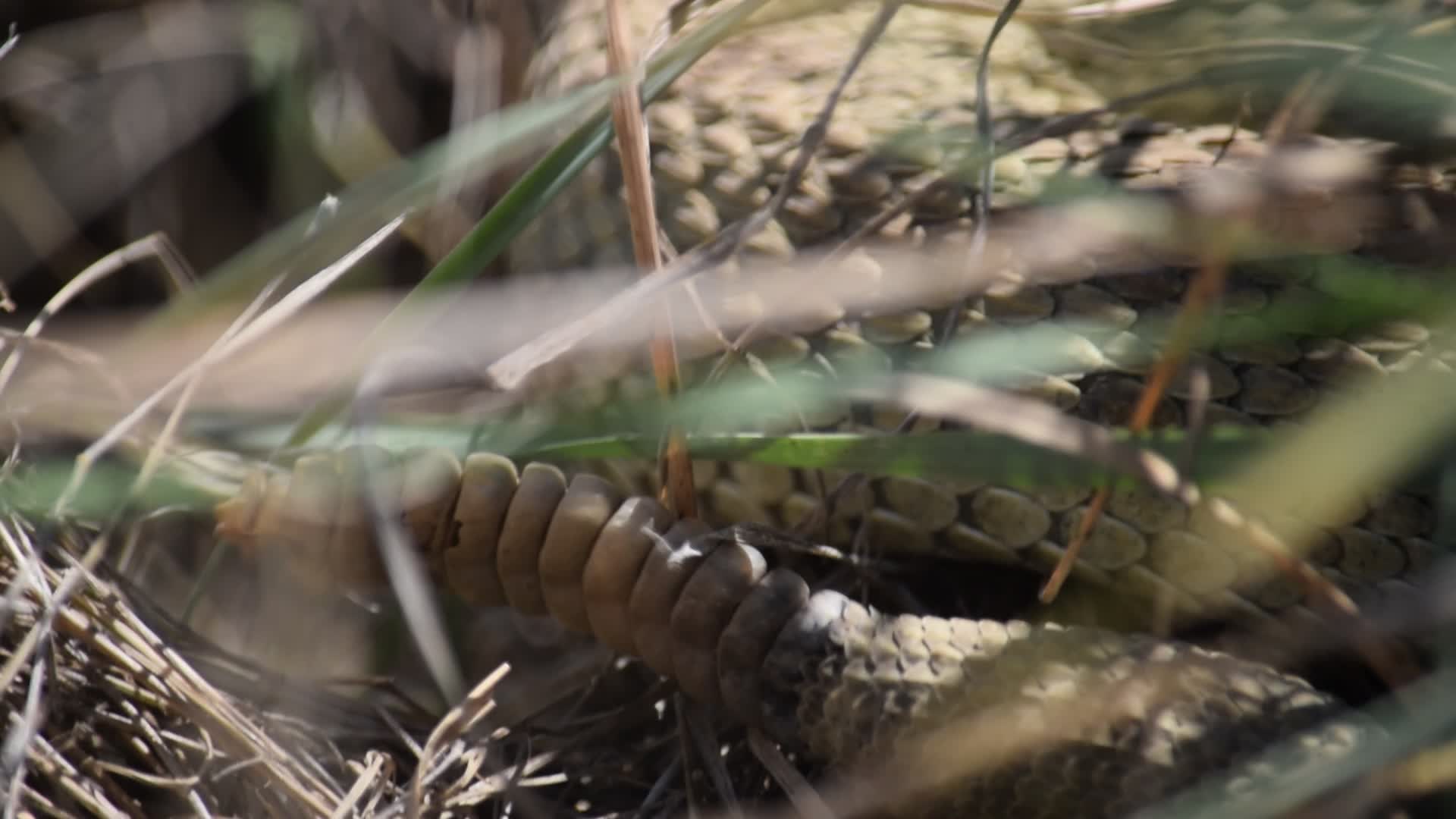
lighter background. Of course their namesake rattle is at the end of
their tail. They are born with a single “button”, and each time they
shed a new rattle is added to the length of the rattle. Rattles
regularly break off as they get worn or damaged.
Habitat
The
prairie rattler is in the most northern part of it’s range here in
Alberta. It can also be found all along the great plains down into
northern Mexico. Among rattlesnakes, this species is most known for it’s
communal denning habits. Some of the largest rattlesnake dens in the
world are right here in Alberta. These snakes live in the short grass
prairie in the southeastern corner of our province, utilizing mammal
burrows, crevices and caves as daily refuges, or to hibernate during the
winter. It is mainly crepuscular, active during sunrise and sunset, but
may be found active at any time.
Conservation
Habitat
destruction is a large problem for most reptiles. Conversion of
rangeland to cultivation is the problem associated with the prairie
rattlesnake. Unfortunately the number one threat towards rattlesnakes
seems to be human hatred. While this species is very economically
significant as a rodent controlling predator, it is targeted on roads by
vehicles and killed on site by many fearful landowners. Accounts
suggest that Albertan populations have been reduced in past decades but
it appears the rattlesnake is still present in healthy numbers.
References
The Amphibians and Reptiles of Alberta by A.P.Russell and A.M.BauerA guide to the Rattlesnakes of the United States by Brian Hubbs and Brendan O’Connor
Snake by Chris Mattison
*Personal communications – CARCNET Saskatoon 2009
Photo by Alyssa Metro
Defensive rattle